God’s first question after Adam and Eve ate from the tree was, “Where are you?”
Adam and Eve had already realized they were naked, sewn fig leaves together to cover themselves, and hidden when they heard God walking in the garden. God knew where they were. He also knew what they had done. So “Where are you?” wasn’t really about finding Adam.
It prompted Adam to start talking. Adam said he heard God, was afraid because he was naked, and hid. That answer led to a much more interesting question.
“Who told you that you were naked?”
Actually, nobody had. He had been naked all along. Genesis makes a point of telling us that before any of this happened, “the man and his wife were both naked, but they were not ashamed.”
Nothing about Adam’s body had changed. What had changed was what Adam knew and how that new knowledge made him see himself.
He suddenly knew shame. This was knowledge he didn’t have before.
I almost hear the question as, “I told you that you didn’t want to know everything. I never meant for you to know shame.”
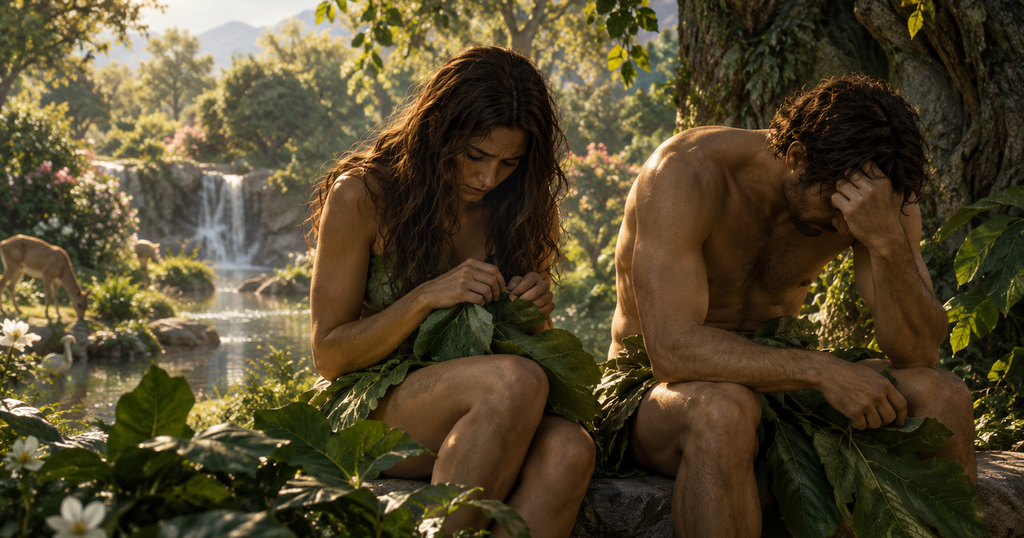
Scripture doesn’t tell us that’s exactly what God meant, so I don’t want to put those words in His mouth. But the contrast is hard to miss. Before the tree, they were naked and unashamed. After the tree, they covered themselves, feared God, and hid from Him.
God’s next question connects the change directly to what they had done:
“Have you eaten from the tree from which I commanded you not to eat?”
God wasn’t learning the answer as the conversation went along. His questions seemed to deliberately steer Adam toward being honest with Him and telling Him what happened.
Then Adam did what people have been doing ever since. He blamed somebody else. He said, “The woman whom You gave to be with me, she gave me some of the fruit of the tree, and I ate.”
Which led God to Eve. He asked of her, “What is this that you have done?”
Eve did the same thing as Adam and blamed the serpent.
There’s something almost painfully familiar about the whole exchange. God’s questions keep giving Adam and Eve opportunities to acknowledge what happened, and their answers keep moving the responsibility somewhere else.
But “Who told you that you were naked?” may be the question that says the most.
Their eyes had been opened, just as the serpent promised. They just hadn’t understood what they were going to see. I think if Aesop were writing a fable, the moral to the story would be: Be careful what you wish for.
God has more questions. See Let Me Ask You Something: When God Asks a Direct Question.