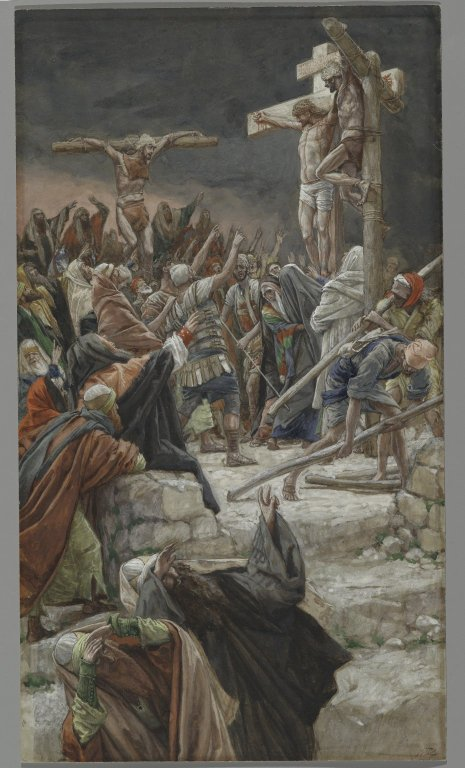
Was he really a thief?
We call him “the thief on the cross” so often that it sounds like Scripture explicitly gives us his occupation, but it doesn’t. Luke calls the two men crucified with Jesus criminals. Matthew and Mark call them robbers, a word often translated “thieves.” Christian tradition blended the accounts, and “the thief on the cross” or “the good thief” is what became part of our common vernacular.
- Matthew: uses the Greek word lēstai, which means robbers or bandits.
- Mark: also uses the Greek word lēstai, which means robbers or bandits.
- Luke: uses the Greek word kakourgoi, which means criminals or evildoers.
- John: does not describe their crimes. He simply refers to them as the two others crucified with Jesus.
Matthew and Mark say both men mocked Jesus, while Luke later tells us that one of them rebuked the other and asked Jesus to remember him. The most natural way to put those accounts together is that he may have started out mocking Jesus too, then changed somewhere during those hours on the cross.
We don’t know his name. We don’t know exactly what crime put him there, nor did Scripture ever specifically calls him “the thief on the cross.” But we definitely know what Jesus called his destination: Paradise.