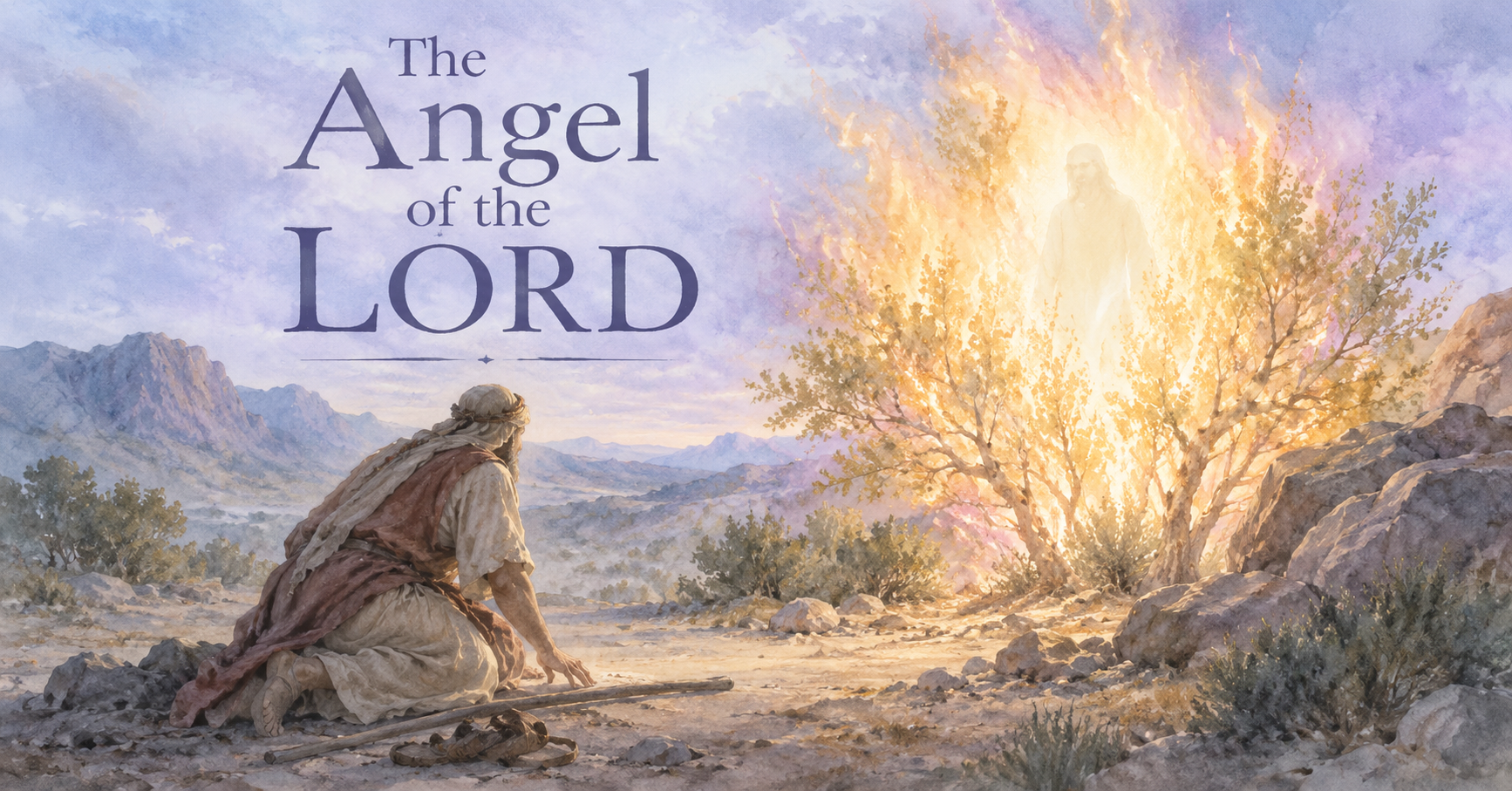
The Angel of the LORD appears again and again in Scripture, sometimes speaking for God, sometimes speaking as God, and sometimes seemingly distinguished from God. So who is He? This timeline follows the encounters specifically identified in the NASB as the Angel of the LORD, then takes a look at where Scripture refers to an angel of the Lord instead. I’m specifying the NASB because translations don’t always make the same “the/an” choice. Judges 2:1, for example, says “the angel of the LORD” in the NASB but “an angel of the LORD” in the KJV. I’m telling you that now so somebody doesn’t show up here with a King James and a pitchfork. Comments “off”….
Hagar in the Wilderness
The Angel of the LORD finds Hagar after she flees from Sarai. He promises to multiply her descendants and tells her that she will give birth to Ishmael. After the encounter, Hagar identifies the One who spoke to her as God.
Abraham and Isaac
As Abraham prepares to sacrifice Isaac, the Angel of the LORD calls to him from heaven and stops him. He says that Abraham has not withheld his son “from Me,” then repeats God’s promise concerning Abraham’s descendants.
Moses and the Burning Bush
The Angel of the LORD appears to Moses in a flame of fire from the middle of a bush. As Moses approaches, the text identifies the speaker as both the LORD and God, who declares Himself to be the God of Abraham, Isaac, and Jacob.
Balaam and the Donkey
The Angel of the LORD stands in Balaam’s path with a drawn sword. Balaam does not see Him at first, but his donkey does. After the LORD opens Balaam’s eyes, he sees the Angel and bows to the ground.
Israel at Bochim
The Angel of the LORD comes to Israel and rebukes the people for disobedience. Speaking in the first person, He says that He brought Israel out of Egypt and made a covenant with them.
Gideon Under the Oak
The Angel of the LORD appears to Gideon and commissions him to deliver Israel from Midian. During the conversation, the passage moves between referring to the speaker as “the Angel of the LORD” and “the LORD.”
Samson’s Parents
The Angel of the LORD announces Samson’s birth to his mother, later returns to speak with Manoah, and ascends in the flame of the altar. Manoah becomes afraid because he believes that he and his wife have seen God.
David and the Plague
After David’s census, the Angel of the LORD brings judgment upon Israel. David sees the Angel near Jerusalem, and Chronicles describes Him standing between earth and heaven with a drawn sword stretched out over the city.
Elijah in the Wilderness
While Elijah sleeps beneath a juniper tree, the Angel of the LORD comes to him, provides food and water, and tells him to eat because the journey ahead will be too much for him.
Elijah and King Ahaziah
The Angel of the LORD instructs Elijah to intercept messengers sent by King Ahaziah, who has sought guidance from Baal-zebub instead of the God of Israel. Later, the Angel tells Elijah to go with the king’s captain without fear.
The Assyrian Army
During Sennacherib’s campaign against Jerusalem, the Angel of the LORD goes out and strikes 185,000 soldiers in the Assyrian camp. Kings and Isaiah record the same event.
Zechariah’s Myrtle-Tree Vision
Zechariah sees the Angel of the LORD standing among myrtle trees as part of a night vision. Unlike several earlier passages, the Angel speaks to the LORD, asking how long Jerusalem and Judah will remain without compassion.
Joshua the High Priest and the Accuser
Zechariah sees Joshua the high priest standing before the Angel of the LORD while Satan accuses him. Joshua’s filthy garments are removed, and his guilt is declared taken away.
THE Angel of the LORD
These are the Old Testament passages in the NASB associated with the distinctive figure followed in the timeline above. References that mention the Angel of the LORD without narrating a separate encounter are marked as non-event references.
Genesis: Genesis 16:7–11; 22:11–15
Exodus: Exodus 3:2
Numbers: Numbers 22:22–35
Judges: Judges 2:1–4; 6:11–22; 13:3–21
Judges: Judges 5:23 Non-event reference
Samuel & Chronicles: 2 Samuel 24:16; 1 Chronicles 21:12–30
Kings: 1 Kings 19:7; 2 Kings 1:3–15; 19:35
Psalms: Psalm 34:7 Non-event reference
Psalms: Psalm 35:5–6 Non-event reference
Isaiah: Isaiah 37:36
Zechariah: Zechariah 1:7–17; 3:1–10
Zechariah: Zechariah 12:8 Non-event reference
AN Angel of the Lord
The NASB also uses the wording an angel of the Lord, particularly in the New Testament. These passages describe angelic messengers without identifying them as the distinctive Old Testament figure followed above.
So… Who Was He?
The Old Testament never gives us an explanation of the Angel of the LORD’s identity, but there are clues! In some encounters He speaks as God, receives responses normally associated with God, and is identified with the LORD. In other passages, particularly Zechariah, He speaks to the LORD as a distinct person.
A Created Angel
Some understand the Angel of the LORD as a heavenly messenger who speaks with God’s authority and represents Him so completely that he can speak in the first person for God.
A Visible Manifestation of God
Others understand these encounters as theophanies, visible manifestations in which God makes His presence known in a form human beings can perceive.
The Pre-Incarnate Christ
Many Christian interpreters have understood the Angel of the LORD as appearances of the Son before His incarnation, especially because the Angel can be distinguished from the LORD while also speaking and acting with divine authority.
And then…he disappears? The Angel of the LORD appears again and again throughout the Old Testament. He speaks with God’s authority. He is sometimes identified with God, yet at other times distinguished from Him. He delivers, judges, protects, commissions, and speaks for the LORD.
Then the New Testament begins, and this mysterious figure is gone.
Angels still appear. The New Testament repeatedly mentions an angel of the Lord. But the Angel of the LORD, the distinctive figure we have followed through these encounters, does not appear again in the same way.
And it’s right about that time that Jesus appears. Hmmm….